Tintern AbbeyWye Valley · Wales

Cistercian, 1131 · roofless since 1536

Walk the cloisters where Cistercians lived

A great abbey church left open to the sky. Cadw conservation currently closes most of the church itself — the cloister, the monastic ranges and the shell are what you walk.

See ticket options From €13
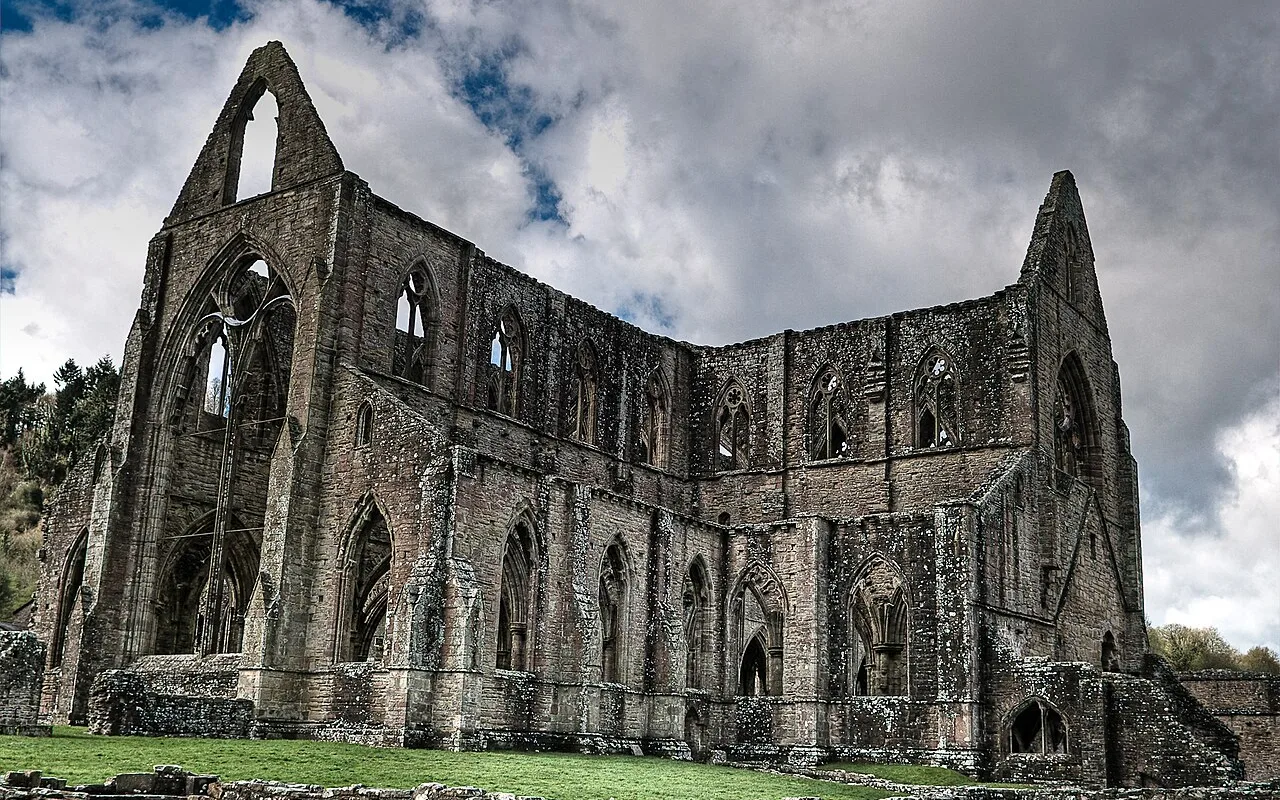
The roofless shell of Tintern Abbey against a heavy sky
1131Founded by Cistercian monks on the banks of the Wye
CistercianWales's first Cistercian abbey, Britain's second
1798The valley that inspired Wordsworth's most famous poem
RooflessOpen to the sky since the Dissolution of 1536

Most of the abbey church is closed for Cadw conservation work, and access to that area is limited. The cloister, monastic ranges and riverside grounds stay open, and your ticket is valid any time during opening hours on your chosen date.

Four fares, one admission

Admission to the abbey and its grounds

Adult

€19

One adult · full access, valid all day on your chosen date

  • Date-specific admission to the abbey site — cloister, monastic ranges and grounds
  • Most of the great church is closed for conservation — access there is limited
  • No fixed time slot — valid any time during opening hours on your date

Junior / Student

€13

One junior (ages 5–17) or student, with valid ID · full access, valid all day on your chosen date

  • Date-specific admission to the abbey site — cloister, monastic ranges and grounds
  • Most of the great church is closed for conservation — access there is limited
  • For ages 5 to 17, or students with valid ID

Senior

€17

One senior, aged 65 and over, with valid ID

  • Date-specific admission to the abbey site — cloister, monastic ranges and grounds
  • Most of the great church is closed for conservation — access there is limited
  • For visitors aged 65 and over — bring valid ID for the gate

Family

€61

2 adults + up to 3 children aged 5–17 · full access, valid all day on your chosen date

  • Date-specific admission for 2 adults and up to 3 children aged 5–17
  • Access to the cloister, monastic ranges and riverside grounds
  • Most of the great church is closed for conservation — access there is limited

Book in your language

Your currency, final price.

No time slot to plan around

Date-specific admission, valid all day.

Ready before you fly

Mobile ticket, ready in your inbox.

24/7 human support

Real people, any hour, any time zone — 24/7, in your own language, right through to your visit day.

Open to the sky

What is left standing, and what is missing

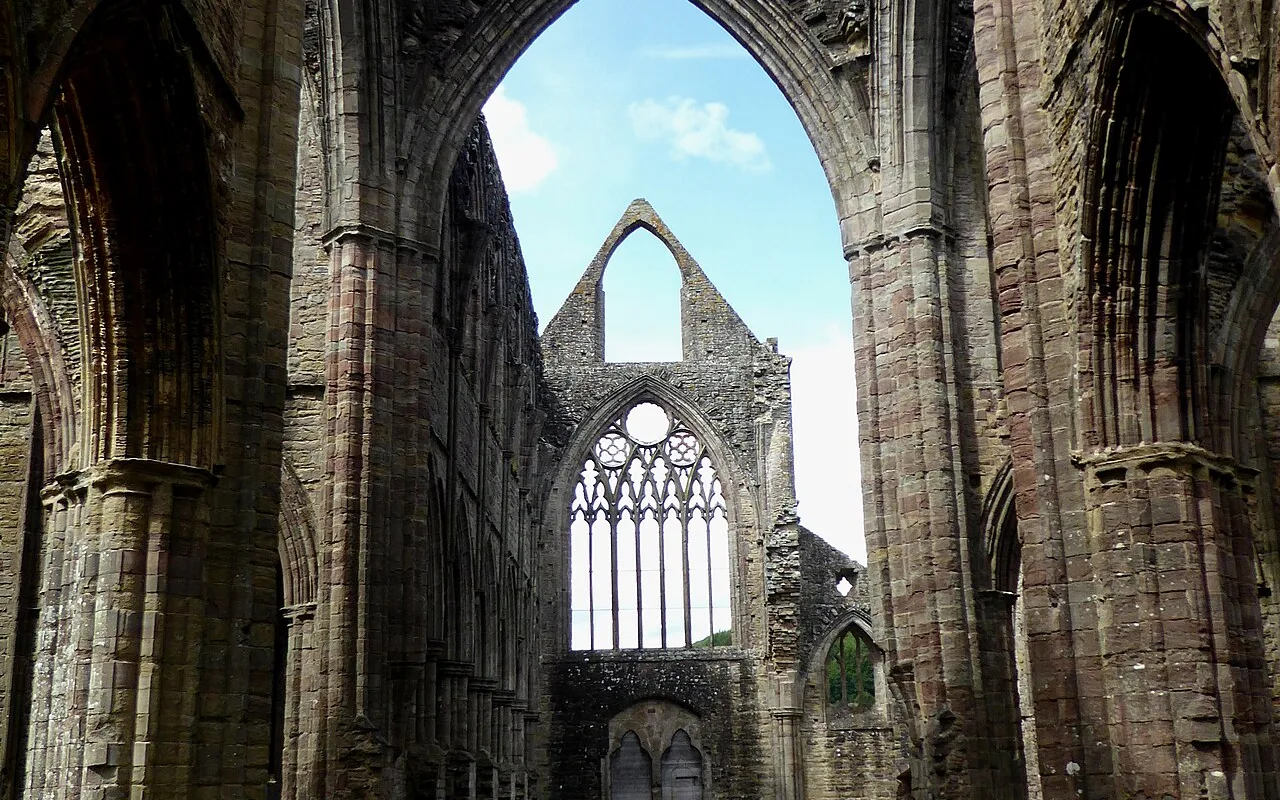
Looking down the roofless nave of Tintern Abbey to open sky
The nave, open to the sky
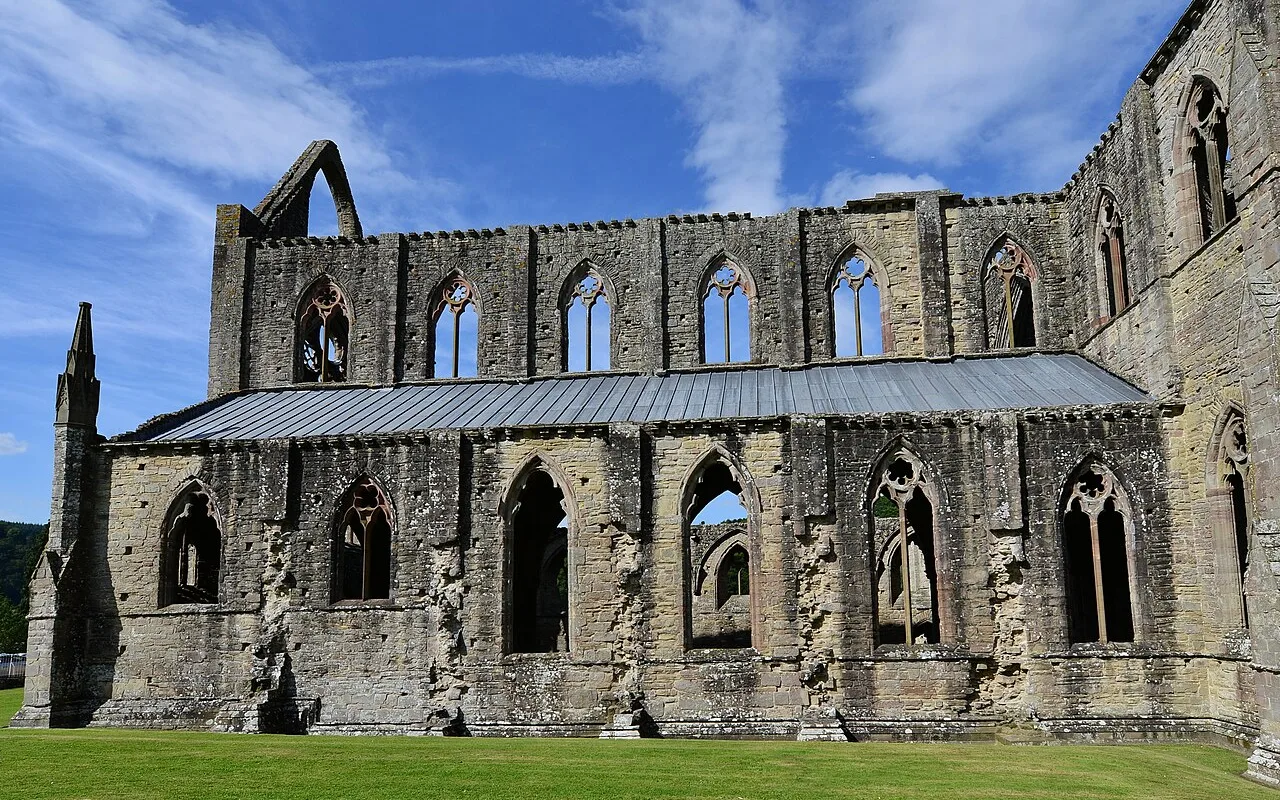
The long lancet windows along the flank of the abbey church
Lancets along the flank

Why this ruin, of all ruins

The abbey that taught Britain to look at ruins

Tintern Abbey stands on the Welsh bank of the River Wye in Monmouthshire, close to the border with England. Founded on 9 May 1131 by Walter de Clare, it was the first Cistercian abbey in Wales and only the second in Britain, after Waverley. What visitors see today is largely the great church rebuilt between about 1269 and 1301 — a building of soaring proportions whose surviving window tracery is widely regarded as one of the finest achievements of British Gothic architecture. The abbey was surrendered to the Crown in September 1536 during Henry VIII's Dissolution of the Monasteries, and its roof and fittings were stripped soon after, leaving the shell that has stood open to the sky ever since.

That roofless emptiness is what turned Tintern from a stripped monastic ruin into one of the most celebrated images in British art and literature. William Wordsworth's 1798 poem, written after a walking tour of the Wye valley, fixed the abbey and its surrounding landscape in the English literary imagination, while J.M.W. Turner sketched and painted its stonework and shifting light in 1792 and again in 1798 — works now held by the Tate, the Victoria and Albert Museum and the British Museum. Together they helped make Tintern one of the founding sites of the Picturesque and Romantic movements, drawing visitors up the Wye by boat from the mid-eighteenth century onward in what became one of Britain's earliest organised tourist trails.

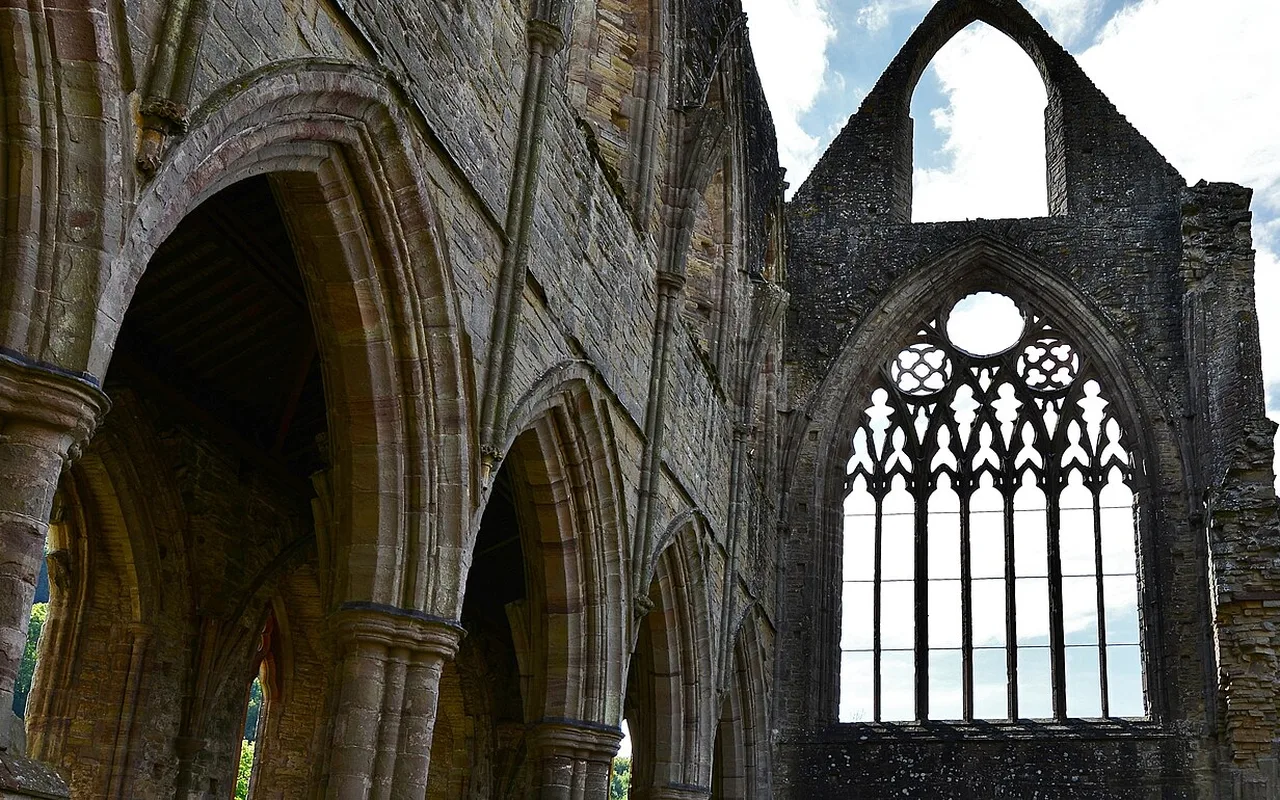
The great traceried window of Tintern Abbey seen from inside

Practical

Before you drive down the valley

Opening hours

1 March–30 June: 9:30am–5pm. 1 July–31 August: 9:30am–6pm. 1 September–31 October: 9:30am–5pm. 1 November–28 February: 10am–4pm. Last admission is 30 minutes before closing. Closed 24–26 December and 1 January.

Address

Tintern Abbey, Tintern, Monmouthshire, NP16 6SE, Wales, UK.

Getting there

Tintern village sits on the A466 in the Wye Valley, about 4 miles (6.5 km) from Chepstow, per Cadw, and within a scenic drive of Bristol and Cardiff. Bus route 69 (Chepstow–Monmouth) stops around 300 metres from the abbey. A pay-and-display car park with around 55 spaces, including 5 disabled spaces, sits beside the entrance.

Accessibility

Cadw rates the site as 'Accessible terrain (Level 1)' — mainly flat and laid to grass with some gravel paths, though there are a few small steps around the site and surfaces can become slippery and uneven in wet weather. Access to the church conservation area is currently limited, including for wheelchair users. Cadw publishes a detailed access guide for the site — contact Cadw ahead of your visit if you have specific access needs.

Bag policy

There is no dedicated left-luggage facility on site, so it's best to travel light — the abbey grounds are outdoors and uncovered, and there is nowhere secure to store large bags or luggage.

Photography

Personal, non-commercial photography is welcome throughout the abbey ruins and grounds. Most of the great church is closed for Cadw's conservation work on its upper walls and access there is limited, with scaffolding up over much of the structure, so plan photography around the cloister, monastic ranges and grounds.
Sent before you go

Your 5-minute Tintern Abbey pre-visit briefing

A short, calm narrative — what this abbey was, why Henry VIII's Dissolution left it roofless, what survives of the great church's window tracery, and why Wordsworth and Turner couldn't stay away. Listen on the drive up the Wye Valley.

  • Who the Cistercians were, and why they built this far up a river valley
  • What the Dissolution actually did to the building in 1536
  • Why Wordsworth and Turner made this the first ruin tourists travelled to see
  • What the conservation work has closed, and what it has not

Asked at the gate

Questions, answered plainly

Do I need to visit at a specific time?

No fixed time slot — your ticket is date-specific rather than timed, so it's valid any time during opening hours on the day you choose. Just arrive within opening hours on your selected date.

Is this a skip-the-line ticket?

Your admission is reserved and confirmed before you arrive, so you go straight in with your mobile ticket rather than queuing at the desk. There's no timed entry to coordinate — you choose the day, we handle the booking.

What's included in the ticket?

Admission to the abbey site — the cloister, the monastic ranges and the riverside grounds. Most of the great church is closed for Cadw conservation work and access there is limited. One ticket covers the open site for the day.

How and when do I get my ticket?

We send your ticket to your email as a mobile ticket with a QR code once your booking is confirmed. There's nothing to print — show it on your phone at the entrance.

Is Tintern Abbey roofless? Will I be outdoors the whole visit?

Yes — the abbey has been open to the sky since its roof was stripped after the 1536 Dissolution. The entire visit is outdoors within the ruined walls, so dress for the weather and bring a coat or umbrella if rain is forecast.

What happens if it rains?

The abbey stays open in all but the most severe weather, since it's a roofless ruin with no indoor galleries to shelter in. Bring suitable clothing — a wet-weather visit still shows the tracery and stonework beautifully, and many visitors find the atmosphere even more striking in rain or mist.

Is there scaffolding on the abbey at the moment?

Yes. Cadw began a five-year conservation programme in 2023 to repair the weathered sandstone on the church's upper walls. Most of the great church is closed to visitors while it continues, with scaffolding over much of the structure. The cloister, monastic ranges and riverside grounds remain open.

How do I get to Tintern Abbey from Chepstow, Bristol or Cardiff?

Chepstow is the closest town, about 4 miles away on the A466, with bus route 69 (Chepstow–Monmouth) stopping around 300 metres from the abbey. Cadw signposts drivers from Cardiff via the M4 (junction 23) and M48 (junction 2) to the A466, and from London and the east via the M4 (junction 21) and the M48. We don't publish drive times — check a live routing service before you set out.

How long does a visit take?

Most visitors spend one to two hours across the cloister, the monastic ranges and the riverside grounds. With most of the great church closed for conservation, a focused visit can take less. There's no fixed schedule, so you set the pace.

Is Tintern Abbey good for children?

Yes. The scale of the ruined church, the open grassy ruins to explore and the riverside setting tend to appeal to children, and the site's mainly flat terrain makes it easy to navigate as a family, though there are a few small steps dotted around. It can be windy and exposed, so dress accordingly.

Who qualifies for the junior or student price?

The junior rate covers ages 5 to 17; students with valid ID also qualify. Bring ID or proof of status to the gate.

Who qualifies for the senior price?

Visitors aged 65 and over qualify for the senior rate — bring valid ID to the gate.

What does the family ticket include?

One family ticket covers 2 adults and up to 3 children aged 5–17, with full access to the whole abbey site — it's the most economical way for a family to visit together rather than buying separate tickets.

Is Tintern Abbey accessible for visitors with limited mobility?

Cadw rates the site as 'Accessible terrain (Level 1)' and it is mainly flat, though there are a few small steps around the site and grass and stone surfaces can be slippery when wet. Cadw publishes a detailed access guide for the site — contact the site ahead of your visit if you have specific access needs.

Can I take photos inside the abbey?

Yes, personal photography is welcome throughout the ruins and grounds — the empty window tracery against the sky is the shot most visitors come for — though most of the great church is closed for conservation, so it is currently photographed from outside the closed area.

Is Tintern Abbey open on public holidays?

The abbey is closed on 24–26 December and 1 January, and runs shorter hours in winter (10am–4pm, 1 November–28 February). We'll flag it if a closure affects the date you've chosen.

Why did Wordsworth and Turner make Tintern Abbey famous?

William Wordsworth's 1798 poem, written after a walking tour of the Wye valley near the abbey, and J.M.W. Turner's watercolour studies of its stonework from 1792 and 1798 helped establish Tintern as one of the founding sites of the Romantic and Picturesque movements, building on the Wye Tour boat trips that had been running since about 1750.

Can I change my mind after booking?

Because admission is date-specific, please choose your travel date with care when you book. All sales are final once confirmed; the only exception is a full refund if the operator cancels your visit. See our terms for the full policy.

Are you the official abbey ticket office?

No. We're an independent concierge service for international visitors. We obtain a genuine admission ticket on your behalf and handle the booking in your own language. Our service fee is included in the price shown, and you can always buy directly from Cadw if you prefer.

What currency am I charged in?

The price you see is the price you pay — we show it in your local currency where we can and charge exactly that amount, with no surprise fees at checkout. Payment is by card on a secure page.

What is Tintern Abbey?

Tintern Abbey (Welsh: Abaty Tyndyrn) is a ruined Cistercian abbey on the River Wye in Monmouthshire, Wales, founded in 1131 by Walter de Clare — the first Cistercian house in Wales and only the second in Britain. Its roofless great church, largely rebuilt around 1269–1301, has stood open to the sky since Henry VIII's Dissolution of the Monasteries in 1536; most of it is currently closed for Cadw conservation work. It is a Grade I listed scheduled monument managed by Cadw, not a UNESCO World Heritage Site.

Who founded Tintern Abbey and when?

Walter de Clare, lord of Chepstow, founded Tintern Abbey on 9 May 1131, granting land on the River Wye to a community of Cistercian monks. It was the first Cistercian abbey in Wales and only the second in Britain, after Waverley Abbey.

Who funded the abbey's Gothic rebuild?

The great church seen today was substantially funded by Roger Bigod, 5th Earl of Norfolk and lord of Chepstow, whose patronage of the 1269–1301 rebuild was significant enough that the monks were still distributing alms in his memory in 1535, the year before the Dissolution.

Is Tintern Abbey a UNESCO World Heritage Site?

No. Tintern Abbey is a Grade I listed scheduled monument managed by Cadw, the Welsh Government's historic environment service — it is not inscribed as a UNESCO World Heritage Site.

Why is Tintern Abbey roofless?

The roof and fittings were stripped and sold shortly after the 1536 Dissolution of the Monasteries, when the abbey was surrendered to Henry VIII's commissioners. The great church has stood open to the sky ever since — nearly five hundred years, longer than the abbey's working life as a monastery.

What happened to Tintern Abbey after the Dissolution?

The building passed into private ownership, granted to Henry Somerset, 2nd Earl of Worcester. For over three centuries it stood as a decaying private ruin, hemmed in for much of that time by seventeenth- and eighteenth-century wireworks and furnaces in the neighbouring Angidy valley, before the Crown purchased it in 1901 and Cadw eventually took over its guardianship in 1984.

What was the Wye Tour?

The Wye Tour was an eighteenth-century boat trip down the River Wye, taken specifically to admire scenery and ruins like Tintern Abbey for their aesthetic qualities. Popularised from around 1750 by the Reverend John Egerton and codified by the Reverend William Gilpin's 1782 guide, Observations on the River Wye, it was one of Britain's earliest organised tours built purely around landscape appreciation, and a direct forerunner of the Romantic movement.

Why is Tintern Abbey associated with Wordsworth and Turner?

William Wordsworth wrote his 1798 poem after a walking tour of the Wye valley near the abbey, and J.M.W. Turner painted its stonework on visits in 1792 and 1798, with studies now held by the Tate and finished watercolours at the Victoria and Albert Museum and the British Museum. Together they helped make Tintern one of the defining sites of British Romanticism and the Picturesque movement.

Did Wordsworth's poem actually describe the ruined abbey?

Not in detail. 'Lines Written a Few Miles above Tintern Abbey' (1798) focuses on memory, the passage of time and Wordsworth's own reflections on the surrounding landscape rather than describing the ruins themselves, though its title permanently linked his name to the abbey.

What did Turner paint at Tintern Abbey?

J.M.W. Turner made a series of watercolour studies of the abbey's stonework, arches and shifting light on visits in 1792 and 1798. The Tate holds his on-the-spot studies, while finished watercolours worked up from them are at the Victoria and Albert Museum and the British Museum, and they shaped how generations of visitors have come to expect a great Gothic ruin to look.

How long does a visit to Tintern Abbey take?

Most visitors spend one to two hours exploring the cloister and monastic ruins; with most of the great church closed for Cadw conservation work, a focused visit can take less. Because entry is date-specific rather than timed, you can move through the site at your own pace.

Is Tintern Abbey open every day?

Yes, except 24–26 December and 1 January. Hours vary seasonally, from 9:30am–6pm in high summer down to 10am–4pm from November to February, with last admission always 30 minutes before closing.

How do I get to Tintern Abbey from Chepstow, Bristol, Cardiff or London?

Chepstow is closest, about 4 miles away on the A466 (Cadw's figure), with bus route 69 stopping around 300 metres from the abbey. Cadw's signed driving routes are M4 junction 23 then M48 junction 2 from Cardiff, and M4 junction 21 then the M48 from London and the east, leaving the M48 at junction 2 for the A466. We don't publish drive times — check a live routing service before you travel.

What happens if it rains during my visit?

The abbey stays open in all but the most severe weather, since it's a roofless ruin with no indoor galleries to shelter in. Bring waterproof clothing and grippy footwear — the ground can be slippery when wet — and many visitors find the atmosphere even more striking in rain or mist.

Is there scaffolding on Tintern Abbey right now?

Cadw is running a five-year conservation project, begun in 2023, to repair the weathered sandstone on the church's upper walls. Most of the great church is closed to visitors while the work continues, with scaffolding over much of the structure. The cloister, monastic ranges and riverside grounds remain open.

Is Tintern Abbey accessible for wheelchair users and pushchairs?

Cadw rates the site as 'Accessible terrain (Level 1)' and it is mainly flat and laid to grass, though there are a few small steps around the site and surfaces can be slippery when wet. Access to the church conservation area is currently limited, including for wheelchair users. Cadw publishes a detailed access guide for visitors planning ahead.

Are dogs allowed at Tintern Abbey?

Yes — dogs on short leads are welcome at ground floor level throughout the site, though only assistance dogs may access any upper areas. Owners are asked to keep dogs away from vegetation, since some wild plants on site are unsuitable for animals.

Can I fly a drone over Tintern Abbey?

Check Cadw's drone guidance before your visit rather than assuming it's permitted — like most historic sites in state care, flying a drone without prior clearance is generally not allowed.

What is the Devil's Pulpit, and can I see the abbey from it?

The Devil's Pulpit is a limestone outcrop on the Offa's Dyke Path, high above the English bank of the Wye opposite Tintern, offering a celebrated elevated view down over the abbey and village. Reaching it from Tintern involves a climb of roughly 300 metres over about a mile and a half each way; the least steep approach is the shorter walk from Tidenham Chase car park on the B4228.

What else is there to see near Tintern Abbey?

Chepstow Castle, a short drive south, and the wider Wye Valley National Landscape (formerly the Wye Valley AONB) are the two most natural pairings, along with Tintern village itself, which has cafés, small shops and riverside walking routes right by the abbey.

When did Cadw take over Tintern Abbey, and what came before?

The Crown purchased the abbey in 1901 from the Beaufort estate, and an extensive programme of restoration and recording ran from 1901 to 1928. Cadw, the Welsh Government's historic environment service, took over guardianship in 1984 and manages the site today as a Grade I listed scheduled monument.

Can I take photos inside the abbey, and when is the light best?

Yes, personal photography is welcome throughout. Morning light suits the east end and presbytery, afternoon light suits the west front and its window tracery, and overcast days often give the most even light across the sandstone — arriving near opening time also helps avoid crowds in shot. Note that most of the great church is closed for conservation, so these views are currently framed from outside the closed area.

Read before you go

Five guides to the abbey

Sources: Cadw official site (operator) · Cadw — Tintern Abbey conservation project · Cadw — Tintern Abbey access guide Last reviewed: